

Market Insight #17 — Market Structure
Hello everyone, and welcome to this week’s market insight.
Portfolio Update:
No changes. Still 100% in cash.
Market Update:
Bitcoin has now reached its short-term holder realized cost. As I explained in Market Insight #12, this level represents the average purchase price of recent buyers. After being underwater for months, many of these participants tend to exit around breakeven, which creates selling pressure.
When I combine this with the broader picture, my view remains unchanged. Global liquidity is still not supportive, Bitcoin has historically traded below MVRV = 1 before forming a bottom, and from a cycle perspective we are still relatively early in the process.
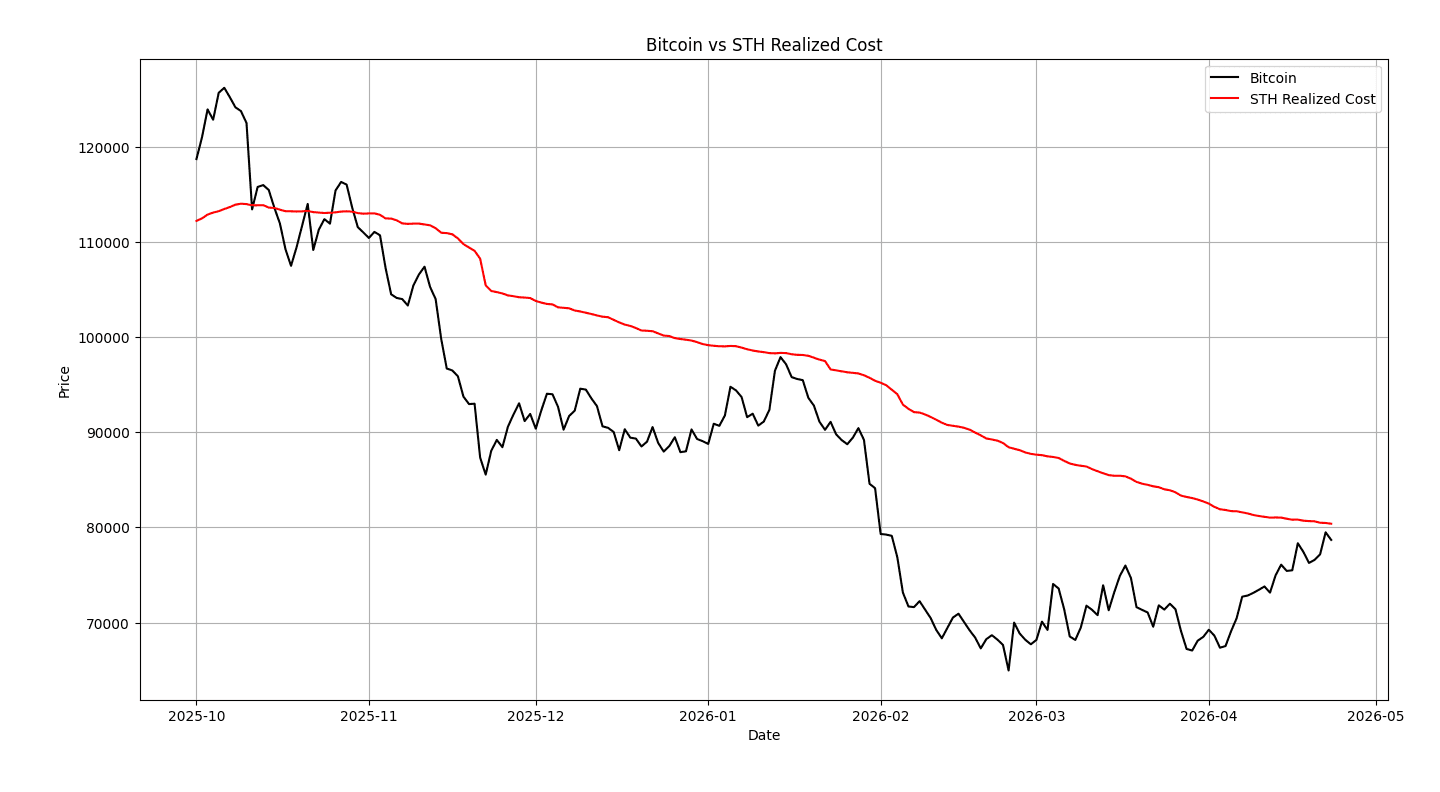
For those reasons, I continue to expect further downside. Although that can take time.
Until then, the plan remains the same:
• Below $55k, I begin scaling in
• Above $55k, patience
Education of the Week — Market Structure
Market structure is simply the way price moves over time. In an uptrend, price makes higher highs and higher lows. In a downtrend, it does the opposite, making lower highs and lower lows. This helps you to interpret what the market is doing. In an uptrend, when price drops temporarily, it is often part of a healthy move higher. In a downtrend, when price moves up, it is often just a temporary bounce before moving lower again.
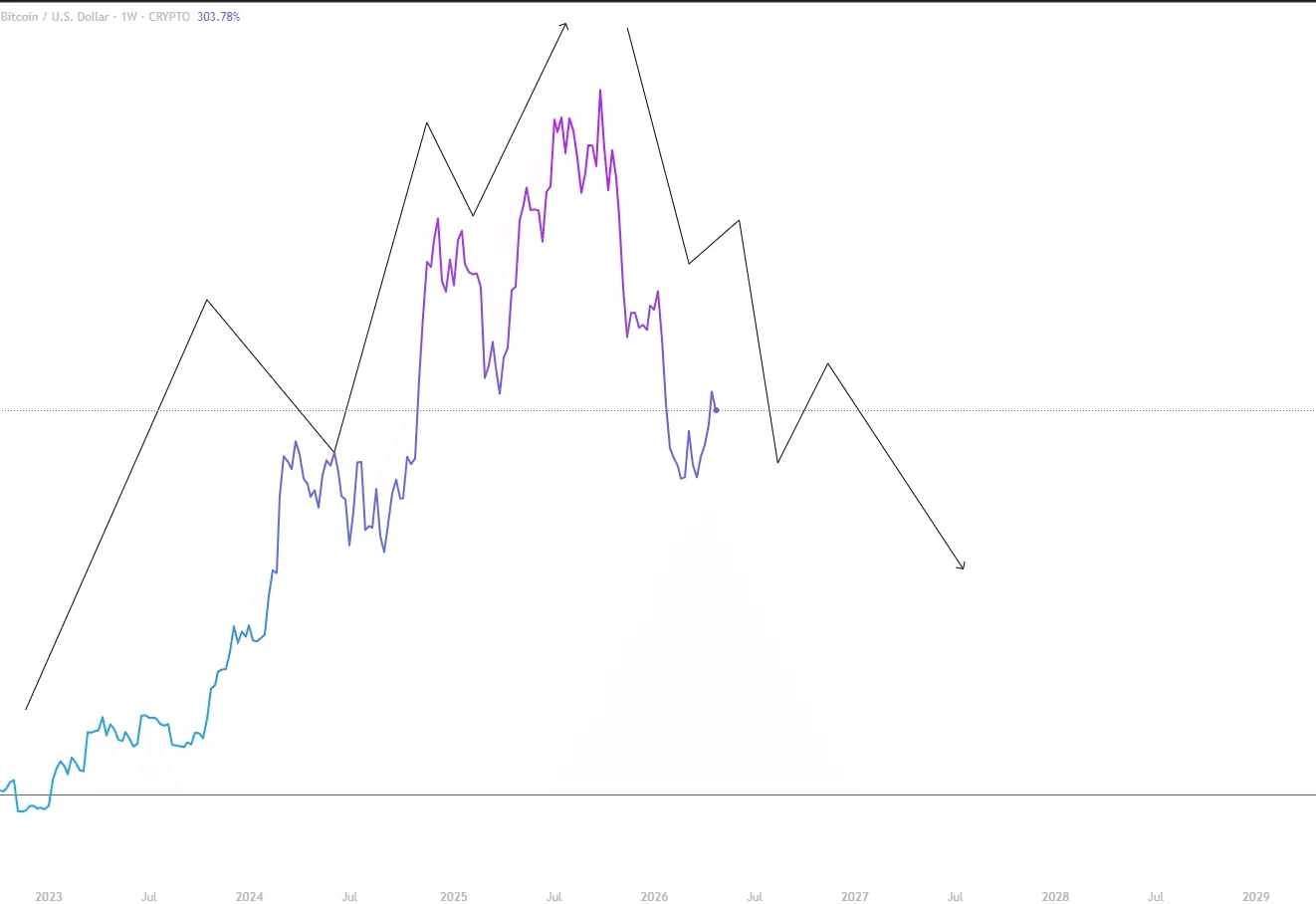
Right now, Bitcoin is still in a downtrend. Each rally has failed to break the previous high, and price continues to struggle below key resistance levels. For the structure to shift meaningfully, Bitcoin would need to break this pattern and start making higher highs again. In my framework, that would require a move above $98k.
Until that happens, the current strength should be viewed as a lower high within a broader downtrend, not the start of a new bull phase.
In a downtrend, strength is something to be cautious about, not something to chase. That is why I remain patient.
The plan stays the same.
Trilux
Explore more blogs
Fintech is its potential to promote financial inclusion. In many parts of the world, millions of people lack access to traditional banking services.