

Market Insight #14 — Bitcoin's halving cycle
Hello everyone, and welcome to this week’s market insight.
Portfolio Update
No changes. Still 100% in cash.
Market Update
Another week, another quiet market. Bitcoin is trading around $68k and has now been stuck in this range for the past eight weeks. Again, as a general rule, the longer price remains in a range, the more volatile the eventual move tends to be. As long as we remain below the short-term holder cost basis that I covered two weeks ago, my view remains unchanged. I still expect this range to ultimately resolve to the downside.
My plan remains the same:
• Below $55k, I begin scaling in
• Above $55k, patience
Education of the Week — Bitcoin halving cycle
Bitcoin undergoes a halving roughly every four years. It is a fixed rule in the protocol that reduces the number of new coins created each day by 50% overnight. Before the most recent halving, miners were adding around 900 Bitcoin per day. After the halving, that number dropped to roughly 450.
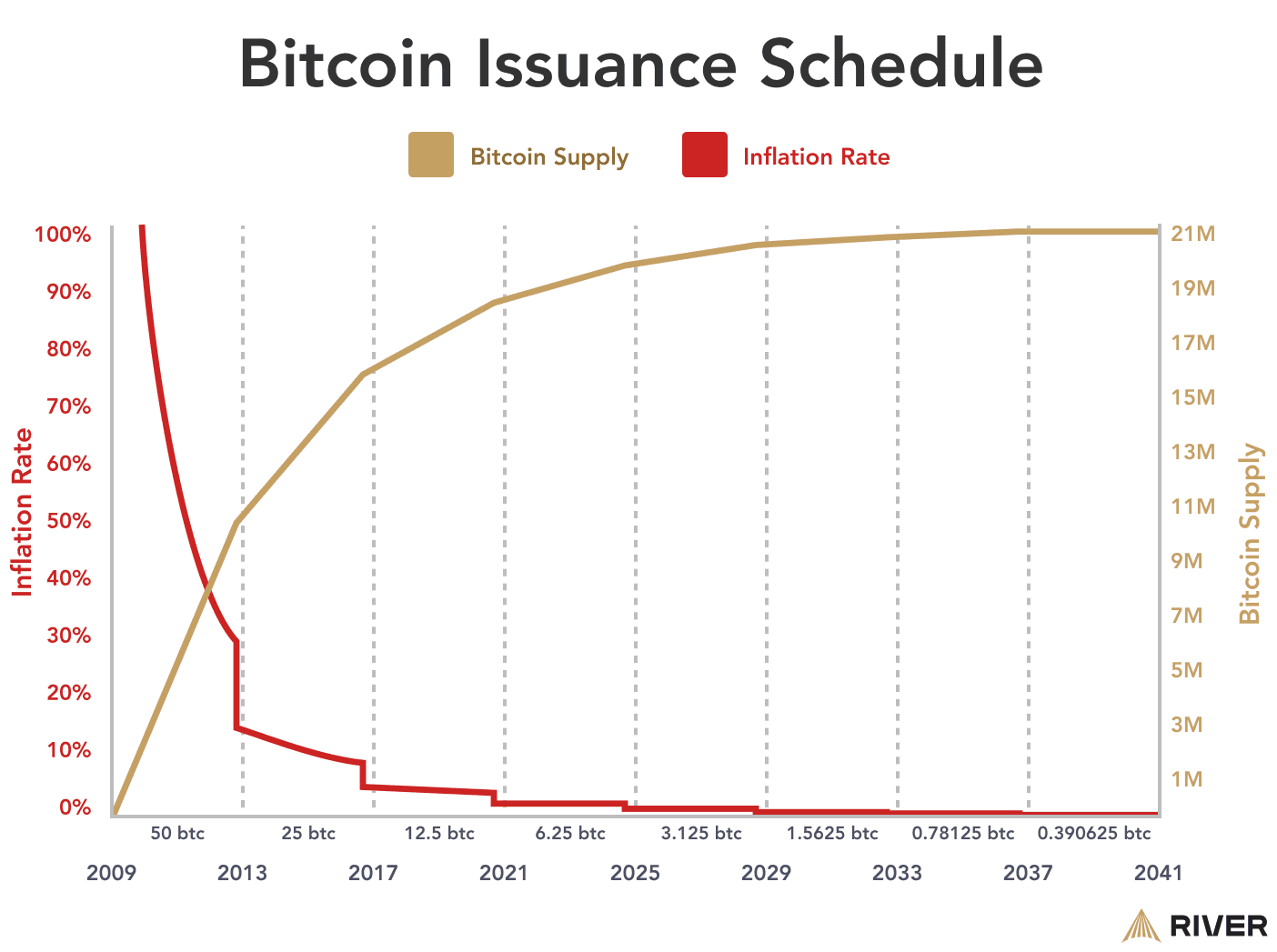
What matters here is that supply changes instantly, while demand does not. It usually stays the same or keeps growing, driven by institutions, ETFs, corporations, nation-states, and eventually retail investors. This creates a supply shock. Far fewer new coins enter the market each day, while demand remains steady or rises. Over time, that imbalance tends to push prices higher as the market adjusts.
This dynamic has shaped Bitcoin’s historical cycles. In previous cycles, price has typically performed well in the 12 to 18 months following a halving. That pattern is one of the main reasons why many investors remain structurally bullish.
However, each halving has a smaller relative impact than the previous one. Bitcoin’s supply is already over 20 million coins, and the remaining ~1 million will take more than 100 years to be mined. The supply shock is still real, but its relative effect continues to diminish over time.
Because of that, Bitcoin is gradually becoming more sensitive to macro conditions, particularly global liquidity. I expected that shift to be more visible this cycle, which is one of the reasons I went long earlier this year. That turned out to be wrong. For now, there is no clear evidence that the halving cycle has stopped working. But there is also no guarantee that it will play out in the exact same way as before. That is something I will continue to monitor in the coming months.
The plan stays the same.
Trilux
Explore more blogs
Fintech is its potential to promote financial inclusion. In many parts of the world, millions of people lack access to traditional banking services.